How Seasonal Venue Changes Influence Participation Trends Across Austria's Regional Card Competitions
Geschrieben von Rafael Powell · 1.11.2026
How Seasonal Venue Changes Influence Participation Trends Across Austria's Regional Card Competitions
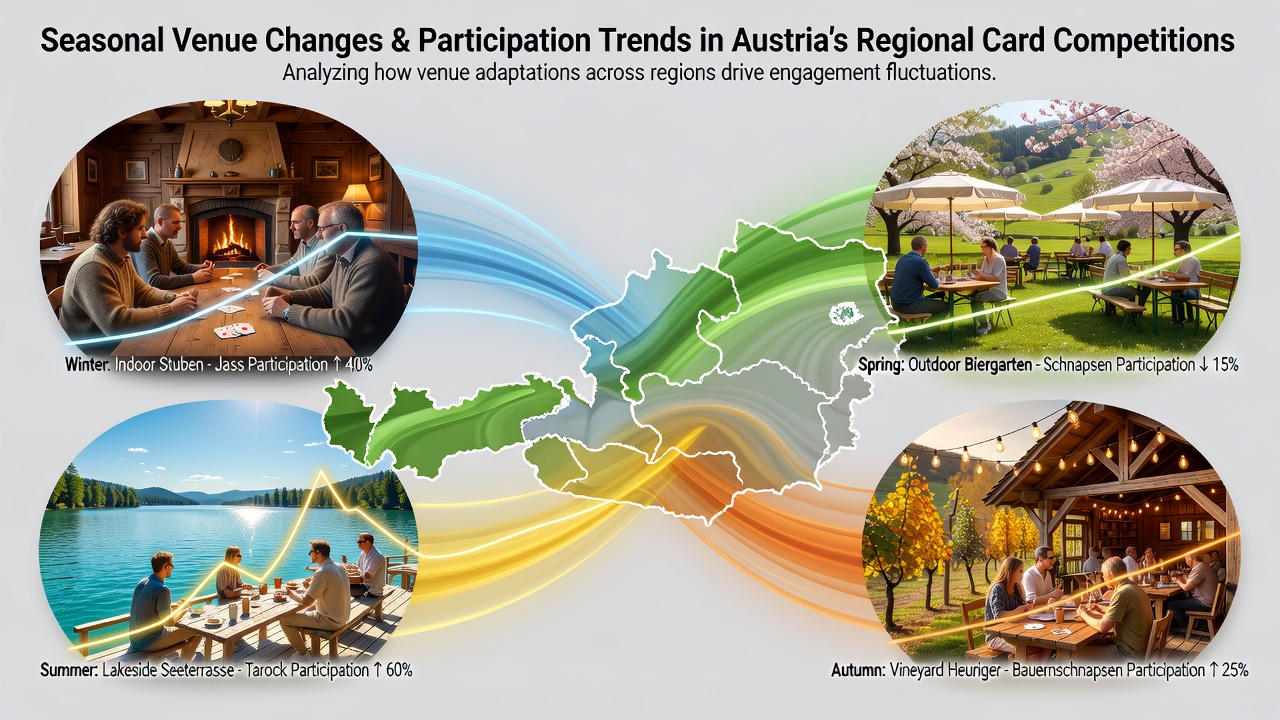
Seasonal venue adjustments shape participation patterns in Austria's regional card competitions as organizers adapt spaces to weather conditions and tourism cycles across provinces like Tyrol, Salzburg, and Vorarlberg. Data from league tracking systems show that summer events often relocate to outdoor terraces or festival grounds while winter sessions consolidate into heated indoor facilities, and these shifts align with measurable changes in attendance figures compiled over multiple years.
Researchers tracking entry logs from 2023 through late 2026 note that alpine regions experience a noticeable uptick in competitor registrations during July and August when venues open along lake shores or mountain passes, whereas November brings a redistribution toward central city halls as temperatures drop and daylight shortens. Figures released by the Austrian Federal Statistical Office indicate that overall participation across these circuits rises by roughly 12 percent in peak summer months compared with shoulder periods, though individual regional circuits display distinct variations tied to local infrastructure availability.
Venue Adaptations and Regional Patterns
Organizers in Carinthia and Upper Austria frequently convert hotel ballrooms into multi-table card arenas during colder months while summer calendars feature pop-up setups at wine festivals or hiking lodges, and this rotation affects how players plan their schedules. Those who monitor archived results from platforms maintained by provincial associations observe that events held in temporary outdoor locations draw higher numbers of first-time entrants from neighboring countries, whereas established indoor venues retain more consistent local attendance throughout the year.
November 2026 data previews suggest continued movement toward consolidated indoor circuits in Vienna and Graz as seasonal tourism tapers, with early reports showing entry volumes stabilizing after the October harvest events conclude. Comparative analysis from studies conducted by the University of Innsbruck highlights how venue accessibility, including public transport links and parking capacity, further modulates these trends in both urban and rural settings.
Data Insights on Player Movement
League archives reveal that participants often migrate between circuits when venues change, with some competitors favoring summer events in western provinces for their scenic appeal and others prioritizing eastern indoor series for logistical ease during winter. Aggregated statistics demonstrate that average table occupancy rates climb in locations offering extended daylight hours, while shorter days correlate with earlier event start times and adjusted prize structures to maintain engagement levels.
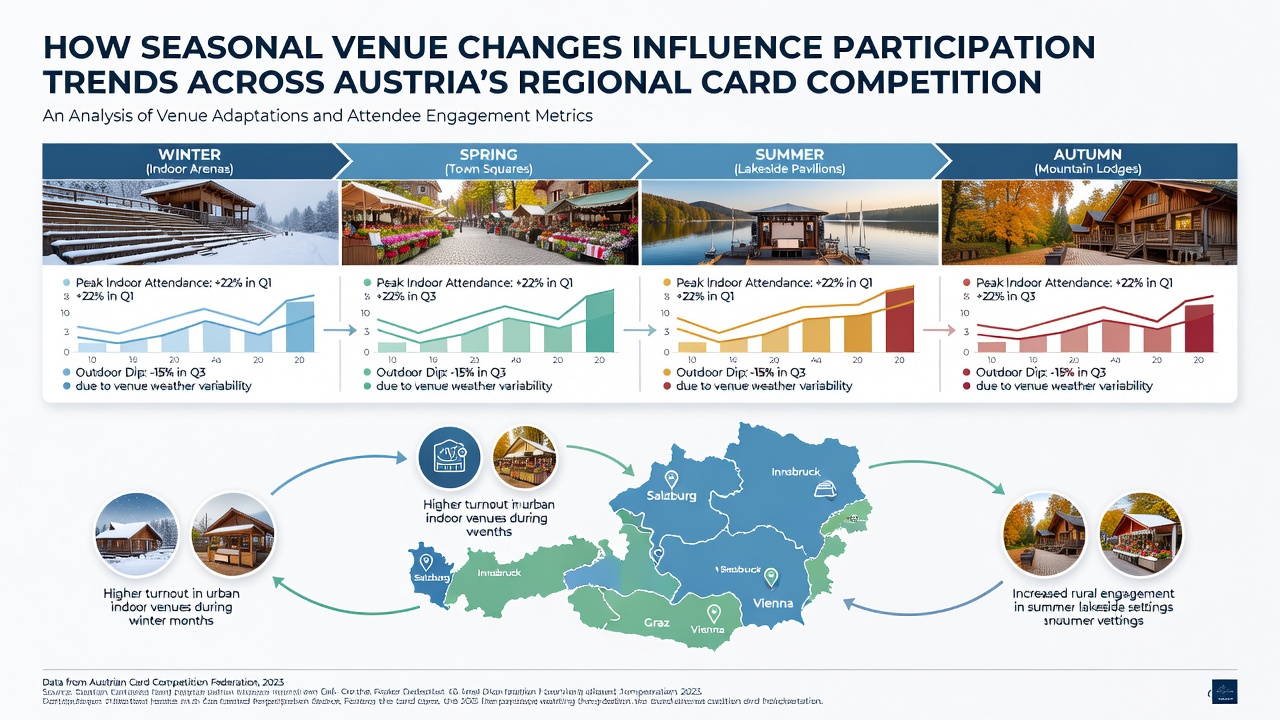
Industry reports from the European Gaming and Betting Association document parallel patterns in adjacent Central European circuits, where venue seasonality produces similar fluctuations in cross-border entries without altering overall skill distribution among regular competitors. Observers note that digital registration systems now capture these movements more precisely, allowing organizers to forecast staffing needs and equipment requirements months ahead based on historical seasonal data.
Longer-Term Effects Across Circuits
Multi-season reviews indicate that repeated venue rotations encourage players to develop adaptability in their preparation routines, particularly when transitioning between high-altitude summer sites and lowland winter facilities. Records maintained by regional federations show sustained growth in female participation during summer outdoor editions in certain provinces, while winter indoor events maintain steadier demographic profiles year after year.
Turnout metrics compiled through 2026 confirm that circuits incorporating flexible venue partnerships sustain higher retention rates across changing seasons compared with those locked into single locations. This holds true even as broader economic factors, including fuel costs and accommodation prices, exert additional influence on travel-dependent competitors from distant regions.
Conclusion
Seasonal venue modifications continue to drive measurable shifts in how Austria's regional card competitions attract and retain participants, with data systems providing increasingly detailed maps of these dynamics. Patterns observed through late 2026 underscore the value of adaptive planning by organizers who align event calendars with climatic and logistical realities across the country's varied landscapes.